Like many, I spent a decent chunk of my Saturday watching coverage of Ted Kennedy's funeral. That much shouldn't come as a shock - When multiple Presidents are in the same room interacting with each other and it's being broadcast live, I'm totally there. Besides, I can't still be the only one utterly fascinated by the friendship George W. Bush and the Clintons seem to have developed, right?
During the Kennedy party's flight from Boston to D.C., CNN kept mentioning and eventually aired a documentary on the late Senator that HBO had put together in recent months. Staying true to its title, the piece largely relied on archival audio and video. Still, the history major in me found the more recent reflections of his that they employed downright criminal in their inadequacy. This is especially true given his heightened sense of self-awareness - Not only was he terminal ill, but his very public 1991 acceptance of his shortcomings had directly lead to a lot of meaningful work over the past 20 years. Like most, I'm beyond the voyeuristic, downright adolescent desire to find out how immediately and exactly he dealt with the well documented parade of personal tragedies. Still, his ability to capture the imagination of Massachusetts and the rest of the US stemmed from his private ability to grieve healthfully enough to eventually use those painful detours as a means of inspiration; of "picking up the torch" and thriving in a situation where so many others would have not only failed, but also been forgiven for doing so. In that sense, some detailed ruminations on what it actually took to overcome would have been tremendously enlightening.
Additionally, there was a portion of this documentary which was completely new and disconcerting to me - In short, it presents authentic audio clips of Nixon (in the Oval Office nonetheless) conspiring to do a variety of illegal and generally despicable things to a political foe who wouldn't even be running for president for another eight years. Nixon directly suggests pinning the attempted George Wallace assassination on a fabricated connected Kennedy supports. He talks about the existing unsuccessful efforts of Federal agents in his employ to catch Kennedy in a politically compromising situation. The President also expresses his desire to supply the Senator with bogus Secret Service protection loyal to him - "If he gets shot, that's too bad." Regardless of the reader's personal opinion on the Senator's actions in the Chappaquiddick Incident, the fact that Nixon would sink to such depths after an event that (even back then) made him an unrealistic candidate for the Presidency makes it even more petty and revolting.
It's been interesting that despite this illegal and generally despicable behavior that is separate from the Watergate Scandal and apparently has been public knowledge for some time, Nixon still saw some praise this weekend for initiating a "War on Cancer." In this climate, it's been deemed a very early form of overall health-care reform and something that Kennedy had been willing to work with him on. Obviously Nixon did do some good, and even without the help of a wildly popular HBO miniseries (John Adams's Presidency was historically irrelevant before Paul Giamatti portrayed him in 2008), Nixon's Presidency had rebounded over the past decade even in liberal circles. Beyond any sympathy that might have been dredged up by Frost/Nixon, more attention than ever is being given to his un-GOP-like sensitivity to a litany of tricky social issues and disinterest in meaninglessly withholding diplomatic recognition to an emerging China.
If Richard M. Nixon didn't suffer from outright mental illness, he definitely did have a dangerously distracting preoccupation with the Kennedy clan. In addition to the clear differences in ideology and outward appearance/public perceptions, Nixon (as history is proving, somewhat accurately) believed nefarious dealings by Daley in Chicago and LBJ in Texas delivered the Presidency to JFK. It's one thing to wander the halls of the White House in the middle of the night and have conversations with your slain rival's portrait. But it's quite another to abuse the Office to such an illegal and generally unforgivable extent. It goes against everything the Office and the Country stand for.
Our 37th President was the worst President.
Living on Eye Street NW, across Virgina Ave. from the Watergate Complex, I'm not sure I ever appreciated our view and access for anything more than its historical value (however notorious). But in what should surely be a relief to Mustachioed Hostelkeeper, the next time I'm in the mood for that dank Safeway's 10 boxes of Hot Pockets for $10 or Watergate Bourbon (sold in a convenient lightweight plastic bottle!), I'll appreciate it for standing as a living testament to the fact the system works. To not include Nixon's second term in a list of America's darkest hours and the process that began in the middle of the night on May 28, 1972 as one of its brightest is downright foolhardy.
Beyond that unpleasantness, I look forward to heading across the River this week to pay my respects. As a moderate, I can't reconcile with some of Kennedy's political views. As someone who considers himself to be moral, I can't reconcile with some of the things he did privately, and yes, that includes the audacious insensitivity of naming his beloved dog "Splash."
Still, he eventually used what could have been a crippling burden to make a genuine difference. And I use the word genuine because his Congressional support also entailed a strikingly personal attitude towards the people (constituents or not) who would benefit from his work in Washington. Far and away, the most fascinating part of all this coverage has been the individual stories onlookers from Tremont Street in the Bay State to Constitution Ave. here in D.C. have had about rich interactions with him; experiences that made a real difference in their lives. My favorite had to be those folks who simply said "Senator Kennedy helped me pick up the pieces and learn to put one foot in front of the other again."
Kennedy also didn't use the legislative branch as his own personal stepping stone to a higher public or more financially lucrative private office, nor was he one of those rightfully loathed, useless career politicians who use Congress as their own personal cash cow. I also kind of dig the fact he ran against an incumbent President from his own party. He did this not because he felt his last name entitled him to the White House or because he had a personal rivalry with Jimmy Carter, but because he viewed the US much in the same way the 1980 election's eventual winner did.
Kennedy, like Reagan, saw an opportunity to reverse the slew of problems that lead to our collective "crisis of confidence." On top of that, his career-spanning mission to overhaul health care had seemed to be shaping up as the most immediate way of putting the country back on track. As much as a kid who was born two years later can gather, it seemed he quickly made peace with the fact the Presidency was - in his own words - "not in the cards." This acceptance, which often comes far too late for a lot of politicians, allowed him to craft the legacy that was celebrated this weekend.
Sunday, August 30, 2009

Friday, August 14, 2009

Sunday, May 17, 2009

Monday, April 20, 2009
"DAMN IT!" - Jack Bauer
Empty your bladders, gas up your black SUVs, and make sure your cell phone is fully charged because in honor of 24's return to form this season (to say nothing of Moustachioed Hostelkeeper's inexplicable, ancient promise of a list-heavy blog), your three contributors would like to share their favorite recurring lines and catch-phrases from a show that adeptly combines high drama, unintentional comedy, and subtle jingoism almost as routinely as I write run-on sentences. Feel free to add your own!
- "Within the hour."
- "That's the wrong play!"
- "Trust me."
- "Just tell me what the hell is going on."
- "____ has gone rogue."
- "Nucular."
- "Millions of lives are at stake!!!"
- "WHO DO YOU WORK FOR?!?!"
- "Don't fight it" - Jack Bauer, in a whisper, as he puts someone he cares for in a sleeper hold.
- "Put me through to the President!"
- "You have my word."
- "NOOOOOOOOOOOOOOOOOO!"
- "Copy that."
- Subpoena-waving goon squads.
- "It's a trap!"
- "We're going to have to do this my way."
- "System-wide reformat."
- "There's no time!"
- "Don't tell me what to feel."
- First Gentleman.
- "This is real."
- "Report you to Division."
And of course - "DAMN IT!!!"
Only five hours left! Godspeed, Madame President. Godspeed.
- "Within the hour."
- "That's the wrong play!"
- "Trust me."
- "Just tell me what the hell is going on."
- "____ has gone rogue."
- "Nucular."
- "Millions of lives are at stake!!!"
- "WHO DO YOU WORK FOR?!?!"
- "Don't fight it" - Jack Bauer, in a whisper, as he puts someone he cares for in a sleeper hold.
- "Put me through to the President!"
- "You have my word."
- "NOOOOOOOOOOOOOOOOOO!"
- "Copy that."
- Subpoena-waving goon squads.
- "It's a trap!"
- "We're going to have to do this my way."
- "System-wide reformat."
- "There's no time!"
- "Don't tell me what to feel."
- First Gentleman.
- "This is real."
- "Report you to Division."
And of course - "DAMN IT!!!"
Only five hours left! Godspeed, Madame President. Godspeed.
Tuesday, February 3, 2009
Why Isn't Bessie Stone's Cricket Dilemma on Facebook Yet?
- His Presidential Exploratory Committee advised against it.
- It's too cheap.
- Competitiveness won't let him contribute to the loss of a playground bet made in middle school over whether or not a kid from Dobbs Ferry could earn a billion US dollars before the age of 25.
- Is "old fashioned" when it comes to his stalking.
- Easier to shirk CHS Reunion responsibilities.
- Has other means of knowing what Katie Wilbur had for lunch today.
- Sophomore year English teacher Ruth Ross IS.
- Fearful I'll invite him to play Scramble; improve on lifetime 12-68 record.
- Wouldn't do justice to Elizabeth Szabo's baby blues.
- It's too cheap.
- Competitiveness won't let him contribute to the loss of a playground bet made in middle school over whether or not a kid from Dobbs Ferry could earn a billion US dollars before the age of 25.
- Is "old fashioned" when it comes to his stalking.
- Easier to shirk CHS Reunion responsibilities.
- Has other means of knowing what Katie Wilbur had for lunch today.
- Sophomore year English teacher Ruth Ross IS.
- Fearful I'll invite him to play Scramble; improve on lifetime 12-68 record.
- Wouldn't do justice to Elizabeth Szabo's baby blues.
Friday, January 23, 2009
A Guide to Philadelphia
Some of this blog's most loyal readers may know that Bessie Stone's Cricket Dilemma graduated from the University of Pennsylvania some years ago. As such, people often ask BSCD for advice on where to visit anytime they travel to historic Philadelphia. Below, you will find a travel guide that BSCD recently put together for BSCD's biggest fan. Be sure to print out a copy and take it with you the next time you venture to the City of Brotherly Love!
A GUIDE TO HISTORIC PHILADELPHIA
Liberty Bell/Independence Hall – the corner of Chestnut Street and South 6th Street – Along with apple pie, Superman, Fanfare for the Common Man, and the New York Yankees, few things evoke imagery of Americana more than these two national landmarks located within 500 feet of one another on Independence Mall in downtown Philadelphia. As we all know from the Tony-award winning musical 1776, Independence Hall was the site of the Second Continental Congress’ debate over, and ultimate adoption of, the Declaration of Independence. Without this building, we might be wearing powdered wigs and eating fish and chips today. Unbeknownst to many, the U.S. Constitution was also signed at Independence Hall.
The relevance of the Liberty Bell, however, remains shrouded in some mystery. Legend has it that the ringing of the Liberty Bell summoned Philadelphians for the initial public reading of the Declaration of Independence and was also used to announce the conclusion of the Battle of Lexington and Concord. But many historians and engineers claim that the steeple from which the bell hung had deteriorated too much by that time to withstand its ringing. Nevertheless, the Liberty Bell really achieved its iconic status as a symbol for the abolitionist movement in the mid-1800s, and again as a symbol of unity following the Civil War. Although some argue that the Bell was first cracked when it arrived in Philadelphia in 1752, most agree that the crack expanded for the final time and rendered the bell unringable when it was rung to honor Washington’s birthday in 1846.
Both landmarks are a reminder that Philadelphia peaked as a city 232 years ago. Among American cities/towns, BSCD can only think of Plymouth, MA (landing site of the Pilgrims); Gettysburg, PA (the turning point in the Union’s battle against the Confederates during the Civil War); and BSCD's hometown (birthplace of BSCD) as other places whose best days are surely behind them.
Fun fact: If you look closely, you will notice that a quotation inscribed on the bell has the state spelled “Pensylvania,” not “Pennsylvania.” The original Constitution also spelled the state “Pensylvania.”
The Betsy Ross House – Arch Street b/t 2nd and 3rd – Diminutive in size, this bandbox packs a lot of historical punch, for the house lays claim as the site where Betsy Ross sewed the first American stars-and-stripes flag. Legend has it that George Washington himself visited Ross at this house and asked if she could commission a flag from a design sketched on a piece of paper he pulled from inside his coat pocket. Her response: “I do not know, but I will try.” The original design had 13 red and white stripes and 13 six-pointed stars, but Ross convinced Washington and his men that five-pointed stars would look better, and they agreed to the change. Although details of the initial encounter with Washington remain fuzzy, the Betsy Ross House affords the unique opportunity to meet Betsy herself (from 10 a.m.-3 p.m.) and ask her if the whole story is nothing but a pile of trash. BSCD wonders how much of an appearance fee she commands!
Strange, but true: As a child, BSCD thought that Betty Crocker, and not Betsy Ross, was responsible for having sewn the first American flag.
Christ Church & Burial Grounds – 5th and Arch - Located steps from Independence Hall, the cemetery is the final resting place for the “Father of Philadelphia” Benjamin Franklin. Among others interred there are Deborah Franklin (Ben’s wife), four signors of the Declaration of Independence (including George Ross, not to be confused with Betsy Ross’s uncle George Ross who was friends with George Washington and is largely credited as the reason why Washington chose Ross to sew the first flag), William Bainbridge (captain of Old Ironsides during the War of 1812), and David Franks (aide for Benedict Arnold at the time he pulled a “Benedict Arnold” and tried to turn West Point over to the British). The Church itself is a few blocks away (2nd Street b/t Market and Arch) and included President Washington, Benjamin Franklin, and Betsy Ross among its congregation. The burial ground located adjacent to the Church houses some notables as well, including Andrew Hamilton, who successfully defended John Peter Zenger against an accusation of libel. Everyone can appreciate a good lawyer (although some prefer them six feet under), so please pay homage as you see fit.
Note: The baptismal font still in use at Christ Church was the one in which William Penn (founder of Pennsylvania) was baptized. It was shipped from London to Philadelphia in the late 17th century.
Reading Terminal Market – 12th and Arch - A melting pot of odoriferous animations, this enclosed farmers’ market is every foodies dream, as over 85 merchants provide a cornucopia of fresh meats, fish, produce, and desserts. From live lobsters to Italian hoagies to pickled vegetables from the Pennsylvania Dutch, the Market has it all. For his first visit there, BSCD surveyed the vast array of ethnic cuisine and local delicacies and wound up ordering a hamburger from the diner. The Market first opened in 1891 and remained vibrant through two World Wars and the Great Depression. It was constructed in an old train shed and now sits adjacent to the city’s Convention Center.
From the Memory Bank: During BSCD’s junior year in college, his dad came down to visit for the sole purpose of going to Bassetts Ice Cream counter at the Market. BSCD thinks his dad secretly drove to Philadelphia the next weekend to go back to Bassetts without telling BSCD, because BSCD's dad commented on how much he enjoyed a flavor of ice cream from Bassetts that he didn’t get when he went there with BSCD.
Franklin Field – the corner of 33rd Street and Spruce Street, University of Pennsylvania - The nation’s oldest two-tiered stadium, Franklin Field has played host to a number of moments embedded deep in the rich tradition of American history. Littered among the snapshots that have helped make Franklin Field the most historic stadium in the country include 18 Army-Navy football games, FDR’s 1936 speech accepting the Democratic Party’s nomination for President, drunken Eagles fans pelting snowballs at Santa Claus during halftime of a December 1968 game, and, most recently, Penn’s 2000 Collegiate Sprint Football League Championship-clinching win against Princeton, perhaps its finest moment. Franklin Field can lay claim to a number of our nation’s firsts: the first scoreboard, the first football radio broadcast, the first football telecast, and Vince Lombardi’s first (and only) NFL playoff loss as a head coach.
Although much smaller crowds attend the regular Penn sporting events held at Franklin Field, a capacity crowd of 52,000 annually packs the stadium for April’s Penn Relays. Fans of the 2000 smash hit Unbreakable may recognize Franklin Field as the setting for several scenes in which Bruce Willis’ character works as a security guard.
In the summer of 2004, right after BSCD graduated, Penn switched the playing surface at Franklin Field from a concrete-like Astrotruf to a plusher SprinTurf. BSCD’s knees and ankles are still bitter.
Did You Know? In 1997, Franklin Field hosted the first-ever U.S. public concert. Bono rocked the joint as the lead singer of the Irish rock band U2. Seven years later, he returned to the stadium to deliver a commencement address for the Class of 2004.
Other Notable Places to Visit
US Mint – 5th Street b/t Race and Arch – The mint is unfortunately closed on weekends, but it’s in the area.
Declaration (Graff) House – 7th and Market – Thomas Jefferson penned the Declaration of Independence here.
Dolley Todd (Madison) House – 4th and Walnut – The former home of a young widower who became the namesake for a subpar brand of ice cream. Oh, and she later moved into some well-known residence in DC for a little bit.
The National Constitution Center – Arch b/t 5th and 6th (along Independence Mall) – The only 160,000-square-foot building in the country devoted entirely to a four-page document.
Franklin’s Print Shop – Market Street b/t 3rd and 4th – It’s that guy again. Long before he flew a kite, he made his name as a printer. When BSCD was younger, BSCD’s older brother tried to convince BSCD to recreate Franklin’s kite-flying experiment.
A GUIDE TO HISTORIC PHILADELPHIA
Liberty Bell/Independence Hall – the corner of Chestnut Street and South 6th Street – Along with apple pie, Superman, Fanfare for the Common Man, and the New York Yankees, few things evoke imagery of Americana more than these two national landmarks located within 500 feet of one another on Independence Mall in downtown Philadelphia. As we all know from the Tony-award winning musical 1776, Independence Hall was the site of the Second Continental Congress’ debate over, and ultimate adoption of, the Declaration of Independence. Without this building, we might be wearing powdered wigs and eating fish and chips today. Unbeknownst to many, the U.S. Constitution was also signed at Independence Hall.
The relevance of the Liberty Bell, however, remains shrouded in some mystery. Legend has it that the ringing of the Liberty Bell summoned Philadelphians for the initial public reading of the Declaration of Independence and was also used to announce the conclusion of the Battle of Lexington and Concord. But many historians and engineers claim that the steeple from which the bell hung had deteriorated too much by that time to withstand its ringing. Nevertheless, the Liberty Bell really achieved its iconic status as a symbol for the abolitionist movement in the mid-1800s, and again as a symbol of unity following the Civil War. Although some argue that the Bell was first cracked when it arrived in Philadelphia in 1752, most agree that the crack expanded for the final time and rendered the bell unringable when it was rung to honor Washington’s birthday in 1846.
Both landmarks are a reminder that Philadelphia peaked as a city 232 years ago. Among American cities/towns, BSCD can only think of Plymouth, MA (landing site of the Pilgrims); Gettysburg, PA (the turning point in the Union’s battle against the Confederates during the Civil War); and BSCD's hometown (birthplace of BSCD) as other places whose best days are surely behind them.
Fun fact: If you look closely, you will notice that a quotation inscribed on the bell has the state spelled “Pensylvania,” not “Pennsylvania.” The original Constitution also spelled the state “Pensylvania.”
The Betsy Ross House – Arch Street b/t 2nd and 3rd – Diminutive in size, this bandbox packs a lot of historical punch, for the house lays claim as the site where Betsy Ross sewed the first American stars-and-stripes flag. Legend has it that George Washington himself visited Ross at this house and asked if she could commission a flag from a design sketched on a piece of paper he pulled from inside his coat pocket. Her response: “I do not know, but I will try.” The original design had 13 red and white stripes and 13 six-pointed stars, but Ross convinced Washington and his men that five-pointed stars would look better, and they agreed to the change. Although details of the initial encounter with Washington remain fuzzy, the Betsy Ross House affords the unique opportunity to meet Betsy herself (from 10 a.m.-3 p.m.) and ask her if the whole story is nothing but a pile of trash. BSCD wonders how much of an appearance fee she commands!
Strange, but true: As a child, BSCD thought that Betty Crocker, and not Betsy Ross, was responsible for having sewn the first American flag.
Christ Church & Burial Grounds – 5th and Arch - Located steps from Independence Hall, the cemetery is the final resting place for the “Father of Philadelphia” Benjamin Franklin. Among others interred there are Deborah Franklin (Ben’s wife), four signors of the Declaration of Independence (including George Ross, not to be confused with Betsy Ross’s uncle George Ross who was friends with George Washington and is largely credited as the reason why Washington chose Ross to sew the first flag), William Bainbridge (captain of Old Ironsides during the War of 1812), and David Franks (aide for Benedict Arnold at the time he pulled a “Benedict Arnold” and tried to turn West Point over to the British). The Church itself is a few blocks away (2nd Street b/t Market and Arch) and included President Washington, Benjamin Franklin, and Betsy Ross among its congregation. The burial ground located adjacent to the Church houses some notables as well, including Andrew Hamilton, who successfully defended John Peter Zenger against an accusation of libel. Everyone can appreciate a good lawyer (although some prefer them six feet under), so please pay homage as you see fit.
Note: The baptismal font still in use at Christ Church was the one in which William Penn (founder of Pennsylvania) was baptized. It was shipped from London to Philadelphia in the late 17th century.
Reading Terminal Market – 12th and Arch - A melting pot of odoriferous animations, this enclosed farmers’ market is every foodies dream, as over 85 merchants provide a cornucopia of fresh meats, fish, produce, and desserts. From live lobsters to Italian hoagies to pickled vegetables from the Pennsylvania Dutch, the Market has it all. For his first visit there, BSCD surveyed the vast array of ethnic cuisine and local delicacies and wound up ordering a hamburger from the diner. The Market first opened in 1891 and remained vibrant through two World Wars and the Great Depression. It was constructed in an old train shed and now sits adjacent to the city’s Convention Center.
From the Memory Bank: During BSCD’s junior year in college, his dad came down to visit for the sole purpose of going to Bassetts Ice Cream counter at the Market. BSCD thinks his dad secretly drove to Philadelphia the next weekend to go back to Bassetts without telling BSCD, because BSCD's dad commented on how much he enjoyed a flavor of ice cream from Bassetts that he didn’t get when he went there with BSCD.
Franklin Field – the corner of 33rd Street and Spruce Street, University of Pennsylvania - The nation’s oldest two-tiered stadium, Franklin Field has played host to a number of moments embedded deep in the rich tradition of American history. Littered among the snapshots that have helped make Franklin Field the most historic stadium in the country include 18 Army-Navy football games, FDR’s 1936 speech accepting the Democratic Party’s nomination for President, drunken Eagles fans pelting snowballs at Santa Claus during halftime of a December 1968 game, and, most recently, Penn’s 2000 Collegiate Sprint Football League Championship-clinching win against Princeton, perhaps its finest moment. Franklin Field can lay claim to a number of our nation’s firsts: the first scoreboard, the first football radio broadcast, the first football telecast, and Vince Lombardi’s first (and only) NFL playoff loss as a head coach.
Although much smaller crowds attend the regular Penn sporting events held at Franklin Field, a capacity crowd of 52,000 annually packs the stadium for April’s Penn Relays. Fans of the 2000 smash hit Unbreakable may recognize Franklin Field as the setting for several scenes in which Bruce Willis’ character works as a security guard.
In the summer of 2004, right after BSCD graduated, Penn switched the playing surface at Franklin Field from a concrete-like Astrotruf to a plusher SprinTurf. BSCD’s knees and ankles are still bitter.
Did You Know? In 1997, Franklin Field hosted the first-ever U.S. public concert. Bono rocked the joint as the lead singer of the Irish rock band U2. Seven years later, he returned to the stadium to deliver a commencement address for the Class of 2004.
Other Notable Places to Visit
US Mint – 5th Street b/t Race and Arch – The mint is unfortunately closed on weekends, but it’s in the area.
Declaration (Graff) House – 7th and Market – Thomas Jefferson penned the Declaration of Independence here.
Dolley Todd (Madison) House – 4th and Walnut – The former home of a young widower who became the namesake for a subpar brand of ice cream. Oh, and she later moved into some well-known residence in DC for a little bit.
The National Constitution Center – Arch b/t 5th and 6th (along Independence Mall) – The only 160,000-square-foot building in the country devoted entirely to a four-page document.
Franklin’s Print Shop – Market Street b/t 3rd and 4th – It’s that guy again. Long before he flew a kite, he made his name as a printer. When BSCD was younger, BSCD’s older brother tried to convince BSCD to recreate Franklin’s kite-flying experiment.
Saturday, April 5, 2008
D.C. Bar Review, Part Two
TGI Friday’s: Yes, I’m serious. Specifically the location off Pennsylvania Ave. at 21st and Eye. It’s a microcosm of D.C. – You have GWU undergrads showing up in giddy packs at all hours, desperately hoping to get away with ordering daiquiris, hardened locals who seem to be regulars or at the very least unemployed friends of the uber-casual, yet competent minority dominated serving staff, and tourists trying to summon up the liquid courage they need before heading over to Camelot, one of D.C.’s finer establishments for adult entertainment. Back in my nomadic days, when I called D.C. home and yet didn't have one here, I spent an entire afternoon at their bar after locking myself out of a fellow contributor’s adjacent apartment and found that I couldn’t help but hum Stevie Wonder & Paul McCartney’s delightfully tacky "Ebony and Ivory." I’ll explore this topic in future entries, but generally, there's an incredible amount of racial tension in D.C. and any environment that manages to put this aside for a few hours, no matter how mundane, deserves credit.
Perhaps more than anything else, even a hardened “foodie” will timidly admit that sometimes, you just get a hankering’ for that greasy, deep-fried, suburban corporate fare that is served to you in ginormous portions by somebody wearing a fake smile and excessive amounts of “flare.” Those tall domestics are also pretty clutch in a City where increasing hipness too often means getting a lot less for a lot more.
Washington Harbour: No rundown of D.C. bars would be complete without taking a cheap shot at the twin establishments found on the banks of the Potomac in Georgetown.

But I’m not going to do that. Rather, I’m going to accept them for what they are, remind people that despite what they may have heard, beers here are the standard $5, and that you are, in fact, paying for the scenery and ambiance. Why do people always talk about that like it’s a bad thing? I’d rather sit on the water, checking out cute joggers and their chocolate labs while waiting for the sun to dip down over the Rosslyn skyline and the lights to come on up river at the Watergate and Kennedy Center than be stuck in some dingy basement a la The Bottom Line. Escape from the humidity and enjoy the sights, sounds, and libations on a summer evening, and then head up Wisconsin for dinner at someplace with a little more local flare.
Irish Times: Certainly a sentimental favorite. Not only is it a CUA bar, not only does it host WAKA post-game flip-cup tournaments, not only do I suddenly have an in with one of their bartenders and his always entertaining girlfriend, and not only is former American Idol contestant/token slut Antonella Barbarella often partaking here, but they have one of the best weekend night atmospheres in the town. You can enjoy $2 Miller products (which can be purchased all around the room, not just at the bar) while taking in the musical stylings of Papa George. He’s everything you would want out of a bar’s melodic entertainment - A seemingly endless acoustic repertoire that offers both classic rock staples and funny, albeit skillful interpretations of modern Top 40 songs.
This place was so clutch when I was living on campus, as Union Station and its Red Line Metrorail stop is literally right across the street. My favorite night out of a (still young) 2008 culminated here, in a lush image that, as someone who pretends to be from Nashville might say, “painted a picture of my life and my dreams.” And as the countdown to WAKA Opening Day begins in earnest, I’m sure more great memories will be made here sooner rather than later. Melodrama aside, this one’s a keeper in the Birreria Paradiso and Big Hunt vein.

Hawk n’ Dove: A veritable D.C. institution; many claim this Capitol Hill tavern is the oldest in the District. Usually found on any cursory, Maxim/GQ/Esquire list of the best watering holes in America, this is THE place to follow “political football” – Congressional staffers, interns, and PolySci majors can be found convening here on any given weekday night during and election year; reacting to cable news the way one would react to an NFL game. Instead of busted traffic lights, old license plates, and taxidermists' handiwork on the walls, the chachki here is comprised of replicas of famous Presidential addresses and portraits.

Additionally, it's an unequivocal Green Bay Packers bar; the only one in the Diamond. Although I was limited to only two full games up there this season, it was almost surreal for this Jersey Boy to finally be caught up in fight songs and chants straight out of Wisconsin. Although the shots of Sambuca after every TD seemed like an odd choice and the bandwagoners got to be too much as the miracle season wore on, I’m grateful for this place’s very existence.
Its very location in the heart of the attractive Capitol Hill neighborhood also scores the place big points. Eastern Market, D.C.’s homage to Seattle’s famous Pike Place Market, is just down the road, solidly recovering from that 2006 fire. And the scores of coffee shops, used record stores, and bistros lend this area a perpetual Sunday morning feel. Sure enough, Sundays up on the Hill are something special – After chasing away Saturday night’s lingering effects with a few mimosas + greasy omelet, a copy of the Post, and a few “apology texts,” you'll be able to start the whole process over again after Aaron Rodgers can’t make it past the second series and your fantasy season goes up in smoke. The whole area is basically an entry out of 'Stuff White People Like'. And as the Class of 2000 begins to contemplate 30, that's really not such a bad thing...
On top of everything else, there’s always that great feeling when your drunken eyes spy the looming, glowing Capitol Rotunda, Supreme Court, Library of Congress, etc. for the first time in hours. Nothing makes you appreciate living in D.C. more than a few rounds at this old stalwart.
Buffalo Billiards: If the Hawk n’Dove has a subtle way of reminding you that you're privileged to live in the capital of the free world, this place reminds you that D.C. is still, at its historic heart, a decidedly Southern city. It has an iffy reputation among Tri-State transplants for their dirty tap lines and the kind of clientele it draws - Look no further than the fact that ‘Buck Hunter’ is one of the establishment’s most popular arcade games. This is the kind of place where bridge and tunnelers (Yes, they have them in D.C. too) can go and not worry about sticking out like a sore thumb. A lot of that has to do with the sprawling nature of the place, but most of it stems from the fact that there are so many diversions. Be it the satellite TVs during football season, the shuffleboard (PS - I dominate), darts, and yes, a seemingly infinite number of billiards tables, there’s always something else to do here. The bar menu is woefully concise and greasy and the beer list sub-standard at best – I rarely see anyone order anything except Miller Lites and Blue Moons here.
Even if you wouldn't dream of actually buying them a round, when suburban girls are trying too hard, it usually means they're scantily clad. And that certainly makes this "necessary evil of a bar" a bit more tolerable.
It’s located right across the street from the Dupont Circle Metro and near plenty of other decent places, so I’m not sure why I find myself ending a lot of nights there as opposed to kicking off things.
Capitol City Brewing Company:

For some reason, I’m always a bit surprised when I realize how receptive even Washingtonian elites are to this regional brewery/chain; it’s always packed to the gills at both locations come happy hour. It makes sense, though… The food has a reputation for its tastiness, diversity, and the bang you get for your buck, and the service is nothing short of personal and superb. Besides the appetizers, the real draw is, unsurprisingly, their original beers. The Prohibition Porter gets enough (well-deserved) credit, but I assume their Capitol Kolsch is what American macro breweries would churn out if making money/swill for those who give beer a less-than-classy reputation wasn’t an object.
Fado: It can be outrageously expensive and outrageously crowded. ALL THE TIME. I would chalk it up to the constant soccer matches playing on their paltry collection of TVs, but aside from a few transplanted Europeans in way-too-tight jerseys, nobody ever really seems to be paying attention to them. It also can’t be the repetitive Irish music, be it live or piped in, that everybody seems to ignore. It probably isn’t Monday night Quizzo either. The architecture is gimmicky and obtrusive more than anything else, the bathrooms too small, the bartenders too interested in chatting amongst themselves, even as the Verizon Center lets out and you can’t even breathe, let alone fight your way to the bar, and on top of everything else, it was recently revealed to be a chain. I didn’t even know chain bars existed outside of those sports bar/arcade joints. Call me a snob, but that tidbit just makes this place even more obnoxious than it already is.
On the plus side, I’ve always enjoyed this place MUCH more in the wee hours, and if you manage to get a table, it’s considerably more tolerable (albeit still too expensive). And its proximity to the Arena usually translates into not only easy access back to Eye Street, but "enthralling" 2am D List celebrity sightings. Jim Gaffigan, ladies and gentleman!
Brickskeller:

I wish it was as easy as “Dude. Thousands of bottled beers from thousands of different places. ‘Nuff said.” But sadly and predictably, it isn’t.
Unbelievably, it’s more of a restaurant than a bar, and that usually translates into lengthy waits to get in the door. Also, their collection is so vast, the servers usually are clueless as to what they actually have in stock on any given night. Nevertheless, it’s decidedly awesome to read Eric Asimov fawn over some craft brew from Oregon one minute and actually be able to taste it after nothing more than a quick jaunt up New Hampshire Ave.
Well, that’s it for now. Hopefully the warm months just around the corner will translate into me frequenting some of the more intriguing bars I’ve only been to once or twice and just an expansion of our drinking horizons in general – Scotch tastings capped by a visit to Ben's Chili Bowl
on the U Street Corridor, more Adams Morgan, more bowling + wings + "white trash mimosas (Miller Lite + Orange Tang) on the GWU Campus, and maybe even throwing a few back in the shadow of the National Shrine in my home away from Eye Street - Brookland. I've been told Washingtonians are quite legendary for their drinking, so there’s a good chance part three will be along quite soon. When in Rome, right?
Perhaps more than anything else, even a hardened “foodie” will timidly admit that sometimes, you just get a hankering’ for that greasy, deep-fried, suburban corporate fare that is served to you in ginormous portions by somebody wearing a fake smile and excessive amounts of “flare.” Those tall domestics are also pretty clutch in a City where increasing hipness too often means getting a lot less for a lot more.
Washington Harbour: No rundown of D.C. bars would be complete without taking a cheap shot at the twin establishments found on the banks of the Potomac in Georgetown.

But I’m not going to do that. Rather, I’m going to accept them for what they are, remind people that despite what they may have heard, beers here are the standard $5, and that you are, in fact, paying for the scenery and ambiance. Why do people always talk about that like it’s a bad thing? I’d rather sit on the water, checking out cute joggers and their chocolate labs while waiting for the sun to dip down over the Rosslyn skyline and the lights to come on up river at the Watergate and Kennedy Center than be stuck in some dingy basement a la The Bottom Line. Escape from the humidity and enjoy the sights, sounds, and libations on a summer evening, and then head up Wisconsin for dinner at someplace with a little more local flare.
Irish Times: Certainly a sentimental favorite. Not only is it a CUA bar, not only does it host WAKA post-game flip-cup tournaments, not only do I suddenly have an in with one of their bartenders and his always entertaining girlfriend, and not only is former American Idol contestant/token slut Antonella Barbarella often partaking here, but they have one of the best weekend night atmospheres in the town. You can enjoy $2 Miller products (which can be purchased all around the room, not just at the bar) while taking in the musical stylings of Papa George. He’s everything you would want out of a bar’s melodic entertainment - A seemingly endless acoustic repertoire that offers both classic rock staples and funny, albeit skillful interpretations of modern Top 40 songs.
This place was so clutch when I was living on campus, as Union Station and its Red Line Metrorail stop is literally right across the street. My favorite night out of a (still young) 2008 culminated here, in a lush image that, as someone who pretends to be from Nashville might say, “painted a picture of my life and my dreams.” And as the countdown to WAKA Opening Day begins in earnest, I’m sure more great memories will be made here sooner rather than later. Melodrama aside, this one’s a keeper in the Birreria Paradiso and Big Hunt vein.

Hawk n’ Dove: A veritable D.C. institution; many claim this Capitol Hill tavern is the oldest in the District. Usually found on any cursory, Maxim/GQ/Esquire list of the best watering holes in America, this is THE place to follow “political football” – Congressional staffers, interns, and PolySci majors can be found convening here on any given weekday night during and election year; reacting to cable news the way one would react to an NFL game. Instead of busted traffic lights, old license plates, and taxidermists' handiwork on the walls, the chachki here is comprised of replicas of famous Presidential addresses and portraits.

Additionally, it's an unequivocal Green Bay Packers bar; the only one in the Diamond. Although I was limited to only two full games up there this season, it was almost surreal for this Jersey Boy to finally be caught up in fight songs and chants straight out of Wisconsin. Although the shots of Sambuca after every TD seemed like an odd choice and the bandwagoners got to be too much as the miracle season wore on, I’m grateful for this place’s very existence.
Its very location in the heart of the attractive Capitol Hill neighborhood also scores the place big points. Eastern Market, D.C.’s homage to Seattle’s famous Pike Place Market, is just down the road, solidly recovering from that 2006 fire. And the scores of coffee shops, used record stores, and bistros lend this area a perpetual Sunday morning feel. Sure enough, Sundays up on the Hill are something special – After chasing away Saturday night’s lingering effects with a few mimosas + greasy omelet, a copy of the Post, and a few “apology texts,” you'll be able to start the whole process over again after Aaron Rodgers can’t make it past the second series and your fantasy season goes up in smoke. The whole area is basically an entry out of 'Stuff White People Like'. And as the Class of 2000 begins to contemplate 30, that's really not such a bad thing...
On top of everything else, there’s always that great feeling when your drunken eyes spy the looming, glowing Capitol Rotunda, Supreme Court, Library of Congress, etc. for the first time in hours. Nothing makes you appreciate living in D.C. more than a few rounds at this old stalwart.
Buffalo Billiards: If the Hawk n’Dove has a subtle way of reminding you that you're privileged to live in the capital of the free world, this place reminds you that D.C. is still, at its historic heart, a decidedly Southern city. It has an iffy reputation among Tri-State transplants for their dirty tap lines and the kind of clientele it draws - Look no further than the fact that ‘Buck Hunter’ is one of the establishment’s most popular arcade games. This is the kind of place where bridge and tunnelers (Yes, they have them in D.C. too) can go and not worry about sticking out like a sore thumb. A lot of that has to do with the sprawling nature of the place, but most of it stems from the fact that there are so many diversions. Be it the satellite TVs during football season, the shuffleboard (PS - I dominate), darts, and yes, a seemingly infinite number of billiards tables, there’s always something else to do here. The bar menu is woefully concise and greasy and the beer list sub-standard at best – I rarely see anyone order anything except Miller Lites and Blue Moons here.
Even if you wouldn't dream of actually buying them a round, when suburban girls are trying too hard, it usually means they're scantily clad. And that certainly makes this "necessary evil of a bar" a bit more tolerable.
It’s located right across the street from the Dupont Circle Metro and near plenty of other decent places, so I’m not sure why I find myself ending a lot of nights there as opposed to kicking off things.
Capitol City Brewing Company:

For some reason, I’m always a bit surprised when I realize how receptive even Washingtonian elites are to this regional brewery/chain; it’s always packed to the gills at both locations come happy hour. It makes sense, though… The food has a reputation for its tastiness, diversity, and the bang you get for your buck, and the service is nothing short of personal and superb. Besides the appetizers, the real draw is, unsurprisingly, their original beers. The Prohibition Porter gets enough (well-deserved) credit, but I assume their Capitol Kolsch is what American macro breweries would churn out if making money/swill for those who give beer a less-than-classy reputation wasn’t an object.
Fado: It can be outrageously expensive and outrageously crowded. ALL THE TIME. I would chalk it up to the constant soccer matches playing on their paltry collection of TVs, but aside from a few transplanted Europeans in way-too-tight jerseys, nobody ever really seems to be paying attention to them. It also can’t be the repetitive Irish music, be it live or piped in, that everybody seems to ignore. It probably isn’t Monday night Quizzo either. The architecture is gimmicky and obtrusive more than anything else, the bathrooms too small, the bartenders too interested in chatting amongst themselves, even as the Verizon Center lets out and you can’t even breathe, let alone fight your way to the bar, and on top of everything else, it was recently revealed to be a chain. I didn’t even know chain bars existed outside of those sports bar/arcade joints. Call me a snob, but that tidbit just makes this place even more obnoxious than it already is.
On the plus side, I’ve always enjoyed this place MUCH more in the wee hours, and if you manage to get a table, it’s considerably more tolerable (albeit still too expensive). And its proximity to the Arena usually translates into not only easy access back to Eye Street, but "enthralling" 2am D List celebrity sightings. Jim Gaffigan, ladies and gentleman!
Brickskeller:

I wish it was as easy as “Dude. Thousands of bottled beers from thousands of different places. ‘Nuff said.” But sadly and predictably, it isn’t.
Unbelievably, it’s more of a restaurant than a bar, and that usually translates into lengthy waits to get in the door. Also, their collection is so vast, the servers usually are clueless as to what they actually have in stock on any given night. Nevertheless, it’s decidedly awesome to read Eric Asimov fawn over some craft brew from Oregon one minute and actually be able to taste it after nothing more than a quick jaunt up New Hampshire Ave.
Well, that’s it for now. Hopefully the warm months just around the corner will translate into me frequenting some of the more intriguing bars I’ve only been to once or twice and just an expansion of our drinking horizons in general – Scotch tastings capped by a visit to Ben's Chili Bowl

on the U Street Corridor, more Adams Morgan, more bowling + wings + "white trash mimosas (Miller Lite + Orange Tang) on the GWU Campus, and maybe even throwing a few back in the shadow of the National Shrine in my home away from Eye Street - Brookland. I've been told Washingtonians are quite legendary for their drinking, so there’s a good chance part three will be along quite soon. When in Rome, right?
Saturday, March 8, 2008
Day 4, A.F.
After nearly 20 years following him, I obviously have a bit to say about Brett Favre's retirement from the Packers and professional football. And to the chagrin of fellow 'contributors' and readers alike, they're simply not going to fit into a witty, taut entry.
But I'm still working through all of it. Suffice to say, I'm simultaneously relieved, disgusted, dislocated, sad, and excited but definitely not ready for the Aaron Rodgers Era in Green Bay.
So for now, just enjoy this video. It's become a punchline in itself to say at this point, but the guy really was having fun out there.
Additionally, if one ever wonders what the dynamic between the three of us here on Eye Street is like, just picture myself and Bessie Stone as Favre and Moustachioed Hostelkeeper as an overwhelmed Andy Reid:
But I'm still working through all of it. Suffice to say, I'm simultaneously relieved, disgusted, dislocated, sad, and excited but definitely not ready for the Aaron Rodgers Era in Green Bay.
So for now, just enjoy this video. It's become a punchline in itself to say at this point, but the guy really was having fun out there.
Additionally, if one ever wonders what the dynamic between the three of us here on Eye Street is like, just picture myself and Bessie Stone as Favre and Moustachioed Hostelkeeper as an overwhelmed Andy Reid:
Friday, February 29, 2008
A Quasi-Solicited Rant for Moustachioed Hostelkeeper on Leap Day
Background Summary: Not only did the mainstream media ignore President Bush's recent trip to Africa, they seemingly went out of their way to avoid explaining why exactly our President is so beloved on the continent.
I think if you polled centrists such as myself - guys who are unfairly painted as "Hardcore Republicans" because they don't take juvenile cracks at the President every chance they get - you would realize pretty quickly that our perceived adoration for George W. Bush has nothing to do with an ignorant, blanket acceptance of all of his policies and politics and everything to do with the fact we don't think he's been given a fair shake outside of a few exceptional weeks in September 2001.
The fact that early on, even major news networks did things not unlike Letterman's Great Moments in Presidential Speeches wasn't a huge deal until it began to overshadow things like the Administration's superb handling of the Hainan Island Incident and an intelligent debate on NCLB.
But it really went to hell after the Taliban and a certain terror organization they were harboring were systematically removed from Afghanistan and scattered to the far corners of Waziristan, Iraq, and North Africa. Most rational people can't truly find fault in Bush's quasi-decision to spend a few extra minutes at that Florida elementary school on the morning of 9/11 in order to deliver a quick statement to the American people as the scope of the attack was revealed. But I'm often incredulous when I hear otherwise intelligent political junkies label Bush as 'asleep at the wheel' in August 2001. Any political romantic will always want the Commander in Chief to channel Harry Truman and his famous wooden sign, but in modern politics, to blame a President for the mistakes and oversights of countless field agents in countless organizations, both federal and civilian, reeks of partisanship. And just as ludicrous 9/11 conspiracy theories have to come to embody the collective inquest of confused, scared individuals attempting to explain the unexplainable, I feel the media's concerted, yet half-hearted attempt to turn an unremarkable memorandum that spoke of nothing more than Al-Qaeda's perpetual desire to inflict harm upon Americans into something much more significant than it actually was, at its core, speaks to that same haunting question - Why?
(Sidebar: I've always found it deliciously hypocritical that the same people who cite the infamous memo as an unforgivable failure of the Bush Administration are usually the same people who relentlessly mock the color-coded threat level system devised by the Department of Homeland Security. While even proponents of the system question its usefulness when an increased alert translates into increased resources and preventive measures being devoted not only to New York and Washington, but Boise and Billings; it's undoubtedly a case of erring on the side of caution when there's increased terrorist chatter and legitimate intelligence).
Eventually, the memo controversy gave way to another pseudo-story that hinged upon what where rumored to be intercepted radio communications between desperate/confused Al-Qaeda grunts and what sounded like the voice of Osama Bin Laden at the Battle of Tora Bora in December 2001 What most people seem to forget (including myself), is that this whole 'Tora Bora as infallible ammunition against what had only months earlier been the Administration's strong-suit' thing was borne and propagated out of the mouths of Gary Bernsten and Al Gore - One trying to sell a book, the other... Well, who the hell knows exactly what Al Gore's life was all about after he lost the White House and before he put together that infamous PowerPoint presentation?
After that story died down, the media was presented with an Afghanistan that was no longer ruled by the Taliban, where Al-Qaeda was relegated to the border region and a handful of 'death rattle' attacks after the thaw, and where for the first time in ages, the country is part of a global, democratic community. Instead of even categorizing Afghanistan as even a minor success, we only hear about the country when there's bad news, when a self-important Wolf Blitzer puts a smirk on and 'presses' GOP candidates on the whereabouts of a man who is logistically irrelevant (or dead), or when extreme left-wingers label it as nothing more than one of 'Bush's Wars,' whatever the hell that is supposed to mean. We all know Afghanistan is not an unbridled success – Again, violence increases every spring, even in Kabul, and although I’m not really sure coalition forces should be acting as DEA officers, the country's poppy production is increasing exponentially. But to outright ignore the positives here is unforgivable and indicative of a larger problem.
It's a similar story in Iraq. Everyone knows our plan of attack didn't account for the insurgency that would follow the initial military victory and toppling of the Hussein regime. These holes have been exploited relentlessly over the past few years with tragic results for Iraqis and American soldiers alike. But what was once an unmitigated disaster has recently turned into something much more optimistic. And this change can be measured in much more than the number of purple fingers journalists are getting - Numbers don’t lie, and the numbers, even if you are hesitant to say the surge has been successful, say violence is significantly down. But instead of zeroing in on this sea change; exploring the how and the why and what it all means to our future there, the media would rather ignore the story altogether.
To that end, I’ve listened to countless journalists tell me over the past few weeks of this Presidential election that healthcare is the most important issue facing voters this November. Healthcare. Just as it would have been unfathomable in September 2007 to say the Eli Manning would lead a Super Bowl-winning, 75 yard drive against Bill Belichick’s 18-0 New England Patriots, can you imagine what your reaction would have been in September 2001 if somebody told you healthcare would be the country’s biggest concern in 2008? Obviously, you would have assumed the US and her allies had fared well in quelling the threat posed by Islamic fundamentalism.
It just strikes me as odd that a national media which was so "responsible" in demanding the firing of Donald Rumsfeld, the capture of Uday And Qusay Hussein, free democratic elections, the capture of their father, the death of al-Zarqawi, the elimination of Al-Qaeda in Iraq’s free-reign and resources in the countryside, and finally a desire for General Petraeus and the Pentagon to formulate some sort of organized battle plan to tackle the insurgency head-on, is conspicuously silent now that of the benchmarks they took the liberty of creating for the Bush Administration have been met.
But the whole body is flawed, and every day provides a shining new example - Just look at their treatment of Fidel Castro's resignation. This is an event that we've been waiting 9 Presidents and half a century for and less than 24 hours after the fact CNN has deemed stories ranging from a lunar eclipse to Hello Kitty backpacks to Clinton snubbing Obama on a congratulatory call as more news-worthy. They know absolutely no shame.
Listen Mustachioed Hostelkeeper, we lived through the Lewinsky scandal, the "great shark attack outbreak of 2004," and countless other media circuses, so I know there's a lot wrong with the American media in its current form just as I know I'm naive to think that every man who seeks the Presidency is a decent man who genuinely has our country's best interests in mind. But when the media makes a concerted effort to ignore an Administration's successes (be it a result of their own individual politics or an ugly desire to boost ratings), it has a direct impact on how its consumers perceive the Presidency. Consequently, it has a direct impact on the future of this nation.
So nevermind the inroads we've made in Africa. Nevermind the aforementioned successes in Afghanistan and Iraq. Nevermind the fact that Al-Qaeda, however splintered it may be, has been denied the leadership, resources, and safe-havens that would be necessary to concoct an attack that could even come close to 9/11. Hell, let's even gloss over the fact there hasn't been any kind of domestic follow-up attack in 7 years with a laughably transparent "Well, terror attacks take a long time to plan" line. Nope, let's just pit everyone against each other so we can produce fluff pieces on how 'divisive' American politics has become, focus exclusively the negatives in Bush policy, and hold our breath until the general election (While doing everything in our power to make sure anyone who doesn't vote for our guy is embarrassed to even suggest they'd vote for Clinton, McCain, or Nader).
At the end of the day, this attitude is so much more than counterproductive, its ingenuous and dangerous. But maybe more than anything else, it's irresponsible. And isn't universal accountability that what the media is supposed to be about in the first place?
Good afternoon and good luck.
I think if you polled centrists such as myself - guys who are unfairly painted as "Hardcore Republicans" because they don't take juvenile cracks at the President every chance they get - you would realize pretty quickly that our perceived adoration for George W. Bush has nothing to do with an ignorant, blanket acceptance of all of his policies and politics and everything to do with the fact we don't think he's been given a fair shake outside of a few exceptional weeks in September 2001.
The fact that early on, even major news networks did things not unlike Letterman's Great Moments in Presidential Speeches wasn't a huge deal until it began to overshadow things like the Administration's superb handling of the Hainan Island Incident and an intelligent debate on NCLB.
But it really went to hell after the Taliban and a certain terror organization they were harboring were systematically removed from Afghanistan and scattered to the far corners of Waziristan, Iraq, and North Africa. Most rational people can't truly find fault in Bush's quasi-decision to spend a few extra minutes at that Florida elementary school on the morning of 9/11 in order to deliver a quick statement to the American people as the scope of the attack was revealed. But I'm often incredulous when I hear otherwise intelligent political junkies label Bush as 'asleep at the wheel' in August 2001. Any political romantic will always want the Commander in Chief to channel Harry Truman and his famous wooden sign, but in modern politics, to blame a President for the mistakes and oversights of countless field agents in countless organizations, both federal and civilian, reeks of partisanship. And just as ludicrous 9/11 conspiracy theories have to come to embody the collective inquest of confused, scared individuals attempting to explain the unexplainable, I feel the media's concerted, yet half-hearted attempt to turn an unremarkable memorandum that spoke of nothing more than Al-Qaeda's perpetual desire to inflict harm upon Americans into something much more significant than it actually was, at its core, speaks to that same haunting question - Why?

(Sidebar: I've always found it deliciously hypocritical that the same people who cite the infamous memo as an unforgivable failure of the Bush Administration are usually the same people who relentlessly mock the color-coded threat level system devised by the Department of Homeland Security. While even proponents of the system question its usefulness when an increased alert translates into increased resources and preventive measures being devoted not only to New York and Washington, but Boise and Billings; it's undoubtedly a case of erring on the side of caution when there's increased terrorist chatter and legitimate intelligence).
Eventually, the memo controversy gave way to another pseudo-story that hinged upon what where rumored to be intercepted radio communications between desperate/confused Al-Qaeda grunts and what sounded like the voice of Osama Bin Laden at the Battle of Tora Bora in December 2001 What most people seem to forget (including myself), is that this whole 'Tora Bora as infallible ammunition against what had only months earlier been the Administration's strong-suit' thing was borne and propagated out of the mouths of Gary Bernsten and Al Gore - One trying to sell a book, the other... Well, who the hell knows exactly what Al Gore's life was all about after he lost the White House and before he put together that infamous PowerPoint presentation?
After that story died down, the media was presented with an Afghanistan that was no longer ruled by the Taliban, where Al-Qaeda was relegated to the border region and a handful of 'death rattle' attacks after the thaw, and where for the first time in ages, the country is part of a global, democratic community. Instead of even categorizing Afghanistan as even a minor success, we only hear about the country when there's bad news, when a self-important Wolf Blitzer puts a smirk on and 'presses' GOP candidates on the whereabouts of a man who is logistically irrelevant (or dead), or when extreme left-wingers label it as nothing more than one of 'Bush's Wars,' whatever the hell that is supposed to mean. We all know Afghanistan is not an unbridled success – Again, violence increases every spring, even in Kabul, and although I’m not really sure coalition forces should be acting as DEA officers, the country's poppy production is increasing exponentially. But to outright ignore the positives here is unforgivable and indicative of a larger problem.
It's a similar story in Iraq. Everyone knows our plan of attack didn't account for the insurgency that would follow the initial military victory and toppling of the Hussein regime. These holes have been exploited relentlessly over the past few years with tragic results for Iraqis and American soldiers alike. But what was once an unmitigated disaster has recently turned into something much more optimistic. And this change can be measured in much more than the number of purple fingers journalists are getting - Numbers don’t lie, and the numbers, even if you are hesitant to say the surge has been successful, say violence is significantly down. But instead of zeroing in on this sea change; exploring the how and the why and what it all means to our future there, the media would rather ignore the story altogether.
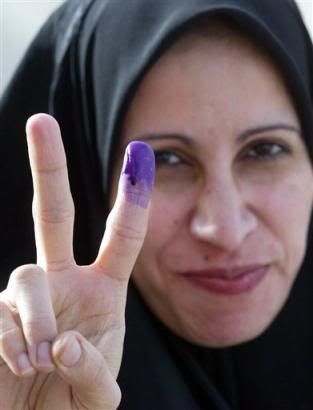
To that end, I’ve listened to countless journalists tell me over the past few weeks of this Presidential election that healthcare is the most important issue facing voters this November. Healthcare. Just as it would have been unfathomable in September 2007 to say the Eli Manning would lead a Super Bowl-winning, 75 yard drive against Bill Belichick’s 18-0 New England Patriots, can you imagine what your reaction would have been in September 2001 if somebody told you healthcare would be the country’s biggest concern in 2008? Obviously, you would have assumed the US and her allies had fared well in quelling the threat posed by Islamic fundamentalism.
It just strikes me as odd that a national media which was so "responsible" in demanding the firing of Donald Rumsfeld, the capture of Uday And Qusay Hussein, free democratic elections, the capture of their father, the death of al-Zarqawi, the elimination of Al-Qaeda in Iraq’s free-reign and resources in the countryside, and finally a desire for General Petraeus and the Pentagon to formulate some sort of organized battle plan to tackle the insurgency head-on, is conspicuously silent now that of the benchmarks they took the liberty of creating for the Bush Administration have been met.
But the whole body is flawed, and every day provides a shining new example - Just look at their treatment of Fidel Castro's resignation. This is an event that we've been waiting 9 Presidents and half a century for and less than 24 hours after the fact CNN has deemed stories ranging from a lunar eclipse to Hello Kitty backpacks to Clinton snubbing Obama on a congratulatory call as more news-worthy. They know absolutely no shame.
Listen Mustachioed Hostelkeeper, we lived through the Lewinsky scandal, the "great shark attack outbreak of 2004," and countless other media circuses, so I know there's a lot wrong with the American media in its current form just as I know I'm naive to think that every man who seeks the Presidency is a decent man who genuinely has our country's best interests in mind. But when the media makes a concerted effort to ignore an Administration's successes (be it a result of their own individual politics or an ugly desire to boost ratings), it has a direct impact on how its consumers perceive the Presidency. Consequently, it has a direct impact on the future of this nation.
So nevermind the inroads we've made in Africa. Nevermind the aforementioned successes in Afghanistan and Iraq. Nevermind the fact that Al-Qaeda, however splintered it may be, has been denied the leadership, resources, and safe-havens that would be necessary to concoct an attack that could even come close to 9/11. Hell, let's even gloss over the fact there hasn't been any kind of domestic follow-up attack in 7 years with a laughably transparent "Well, terror attacks take a long time to plan" line. Nope, let's just pit everyone against each other so we can produce fluff pieces on how 'divisive' American politics has become, focus exclusively the negatives in Bush policy, and hold our breath until the general election (While doing everything in our power to make sure anyone who doesn't vote for our guy is embarrassed to even suggest they'd vote for Clinton, McCain, or Nader).
At the end of the day, this attitude is so much more than counterproductive, its ingenuous and dangerous. But maybe more than anything else, it's irresponsible. And isn't universal accountability that what the media is supposed to be about in the first place?
Good afternoon and good luck.
Wednesday, February 20, 2008
The Watergate
Its name is synonymous with the kind of slow-burning, excruciatingly public decay only a vintage Beltway political scandal can deliver. Of course, it was here where our disenchantment with the Presidency began in earnest; where the events that would eventually unravel both the political career and sanity of Richard M. Nixon were set in motion. 25 years later, a young White House intern at the heart of another major scandal that rocked the foundations of American politics would spend months in veritable hiding at her parents’ posh suite in the upper reaches of the South building.
Before the Watergate became infamous, it was famous. Its stark modernity and sophistication, which pervaded everything from its aesthetics to residents to clientele, garnered the Luigi Moretti creation international praise. Today, this sleekness has given way to an unshakable sense of irrelevancy - The architecture and décor is drab and dated, silver-haired residents toting toy poodles routinely go weeks at a time without leaving the grounds, the once luxurious hotel is indefinitely shuttered, and only a handful of stores remain in what was once an exclusive enclave of street-level boutiques. The sheer number of politicians, lobbyists, and social elite that called the Watergate home once lent it the nickname ‘White House West.’ Today, Cheney’s motorcade screams down Virginia Avenue in a daily blur while an endless stream of cabs carries well-heeled tourists to something newer, trendier, and generally more pertinent just around the bend in Georgetown. Even the incessant air traffic to and from Reagan National, just downriver, lends an unshakable feeling that time has passed this place by.
The splotchy grey concrete mirrors the inherent dreariness and melancholy of overcast days. And after the sun dips down over what has become a crowded Rosslyn skyline just across the Potomac, this feeling becomes palpable. It seems like every tenant turns in by 9pm; on this evening in particular, the flickering blue light of a television left on in some penthouse is about the only reminder that the building even exists. This certainly provides a contrast to the arresting luminosity of the adjacent George Washington University graduate dorm. Perpetually adorned with Christmas lights and homemade political signs, the building exudes youthful optimism (and, judging from the steady take-out delivery traffic, bad eating habits).
This contrast has not gone unnoticed by long-time Watergate residents, and on long lines at the Complex’s basement Safeway, they can barely contain their contempt for the encroaching youth. As annoying as the 'GW World' card and the havoc it wreaks on the store’s ancient cash registers can be, it is no reason to mutter curses under your breath; treat the cashiers in a sub-human matter. What is most striking about these daily passive aggressive battles is the fact Watergate residents are not ignorant to the all-inclusive deterioration, just indifferent. In a vestige of what once was, a sense of entitlement mixes with the quiet desperation of old age and we get a somber yet familiar view of what both the Watergate and the people who inhabit it have become – D.C. veterans unraveling before our very eyes.
Before the Watergate became infamous, it was famous. Its stark modernity and sophistication, which pervaded everything from its aesthetics to residents to clientele, garnered the Luigi Moretti creation international praise. Today, this sleekness has given way to an unshakable sense of irrelevancy - The architecture and décor is drab and dated, silver-haired residents toting toy poodles routinely go weeks at a time without leaving the grounds, the once luxurious hotel is indefinitely shuttered, and only a handful of stores remain in what was once an exclusive enclave of street-level boutiques. The sheer number of politicians, lobbyists, and social elite that called the Watergate home once lent it the nickname ‘White House West.’ Today, Cheney’s motorcade screams down Virginia Avenue in a daily blur while an endless stream of cabs carries well-heeled tourists to something newer, trendier, and generally more pertinent just around the bend in Georgetown. Even the incessant air traffic to and from Reagan National, just downriver, lends an unshakable feeling that time has passed this place by.
The splotchy grey concrete mirrors the inherent dreariness and melancholy of overcast days. And after the sun dips down over what has become a crowded Rosslyn skyline just across the Potomac, this feeling becomes palpable. It seems like every tenant turns in by 9pm; on this evening in particular, the flickering blue light of a television left on in some penthouse is about the only reminder that the building even exists. This certainly provides a contrast to the arresting luminosity of the adjacent George Washington University graduate dorm. Perpetually adorned with Christmas lights and homemade political signs, the building exudes youthful optimism (and, judging from the steady take-out delivery traffic, bad eating habits).
This contrast has not gone unnoticed by long-time Watergate residents, and on long lines at the Complex’s basement Safeway, they can barely contain their contempt for the encroaching youth. As annoying as the 'GW World' card and the havoc it wreaks on the store’s ancient cash registers can be, it is no reason to mutter curses under your breath; treat the cashiers in a sub-human matter. What is most striking about these daily passive aggressive battles is the fact Watergate residents are not ignorant to the all-inclusive deterioration, just indifferent. In a vestige of what once was, a sense of entitlement mixes with the quiet desperation of old age and we get a somber yet familiar view of what both the Watergate and the people who inhabit it have become – D.C. veterans unraveling before our very eyes.
Subscribe to:
Posts (Atom)